Freelancer Magazine | Digital Membership & Magazine Site on Subbly
Freelancer Magazine needed a Subbly powered membership site with gated content, a members area, and e commerce functionality. Subcrafted delivered a full digital magazine storefront with CMS integration, email capture, and SEO ready pages.

Project summary
- Brand
- Freelancer Magazine
- Industry
- Digital memberships
- Platform
- Subbly
- Build type
- Membership and content storefront
- Timeline
- 14 days
What Subcrafted built
Freelancer Magazine needed a Subbly powered membership site with gated content, a members area, and e commerce functionality. Subcrafted delivered a full digital magazine storefront with CMS integration, email capture, and SEO ready pages.
Key features
Solution
The Challenge
Scattered systems: Magazine sales, course enrollments, and event registrations lived in separate tools that didn't talk to each other.
Manual enrollment: Every course signup and event registration required someone to manually process and follow up.
No unified brand experience: The website didn't match the professional quality of their print magazine.
Missed opportunities: No way to capture leads who weren't ready to buy immediately interested visitors simply left.
Features
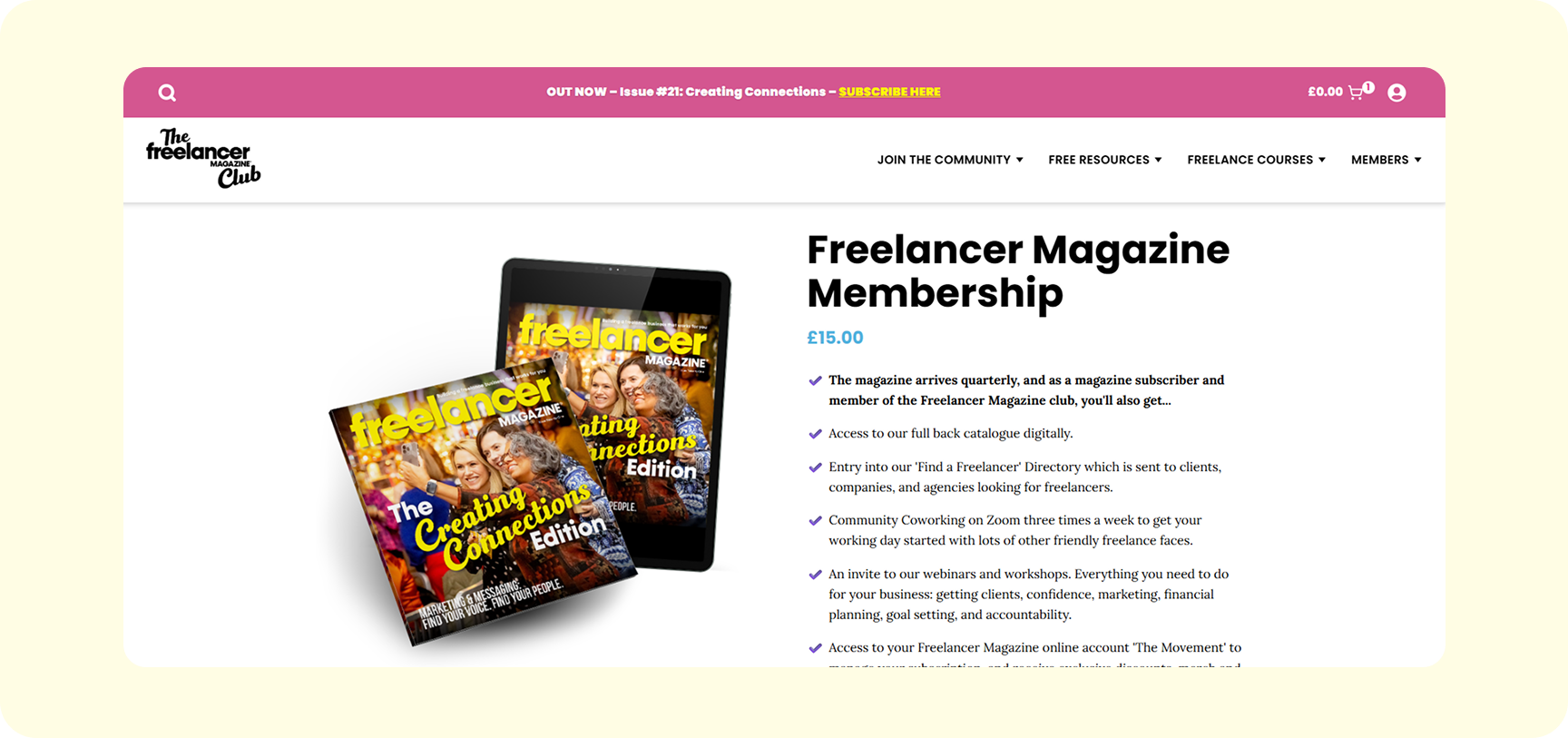
Unified storefront for every product type
One shop page selling magazine subscriptions, single issues, starter packs, and courses all connected to a single checkout system.
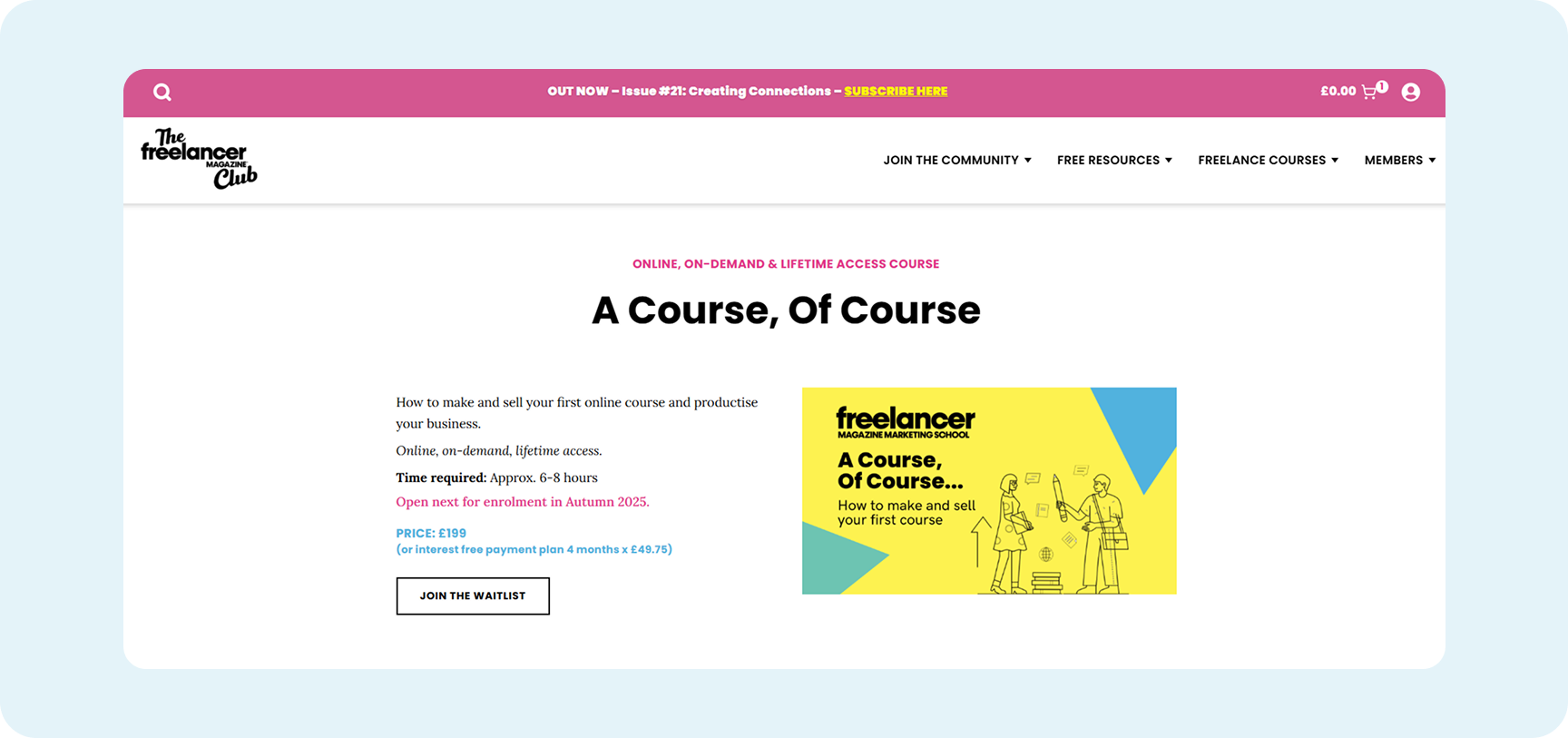
Course landing pages that convert
Dedicated sales pages for each course with enrollment flows, curriculum outlines, testimonials, and FAQ sections designed to turn readers into students.
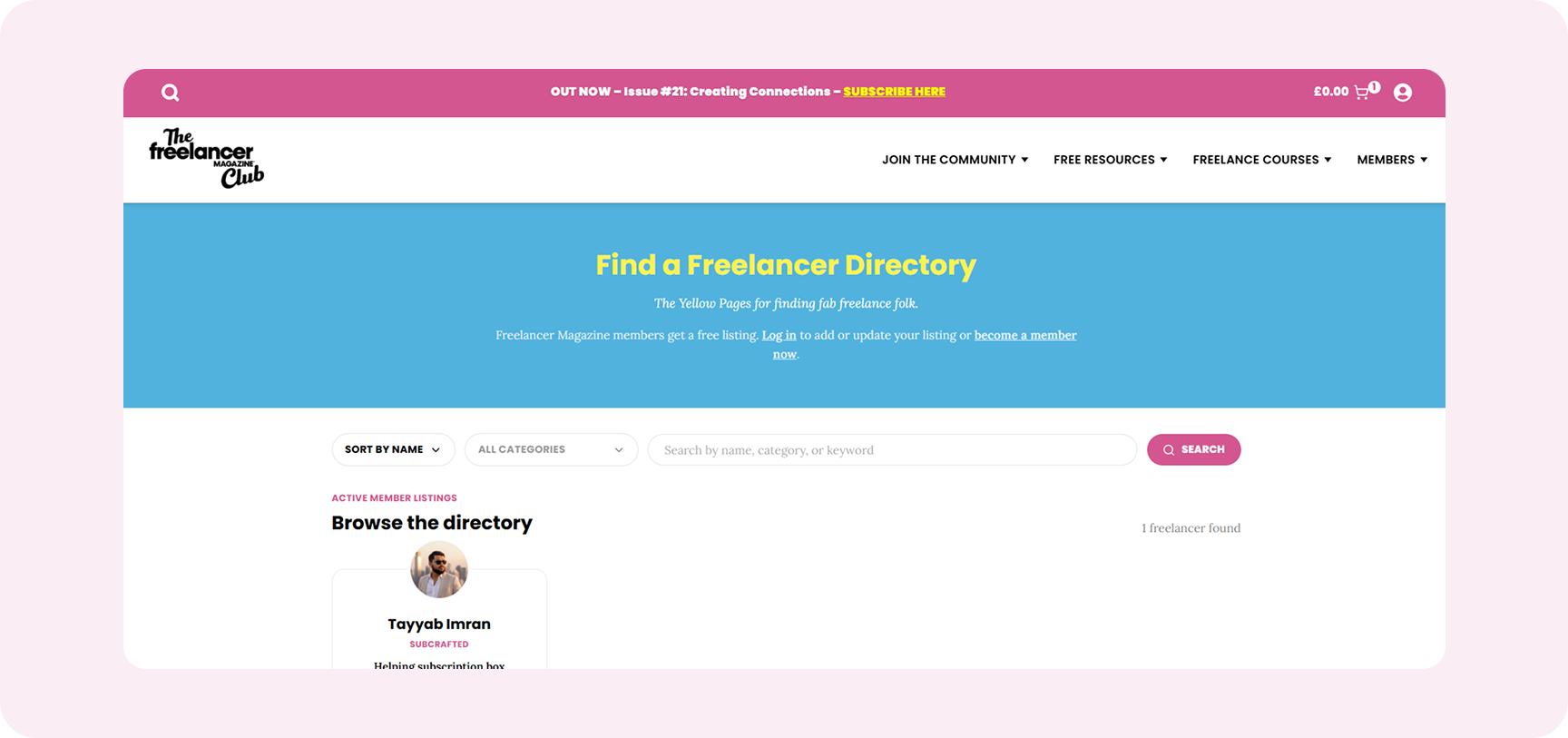
Member directory for community discovery
A searchable freelancer directory where members can showcase their services, filter by category, and connect with potential clients.
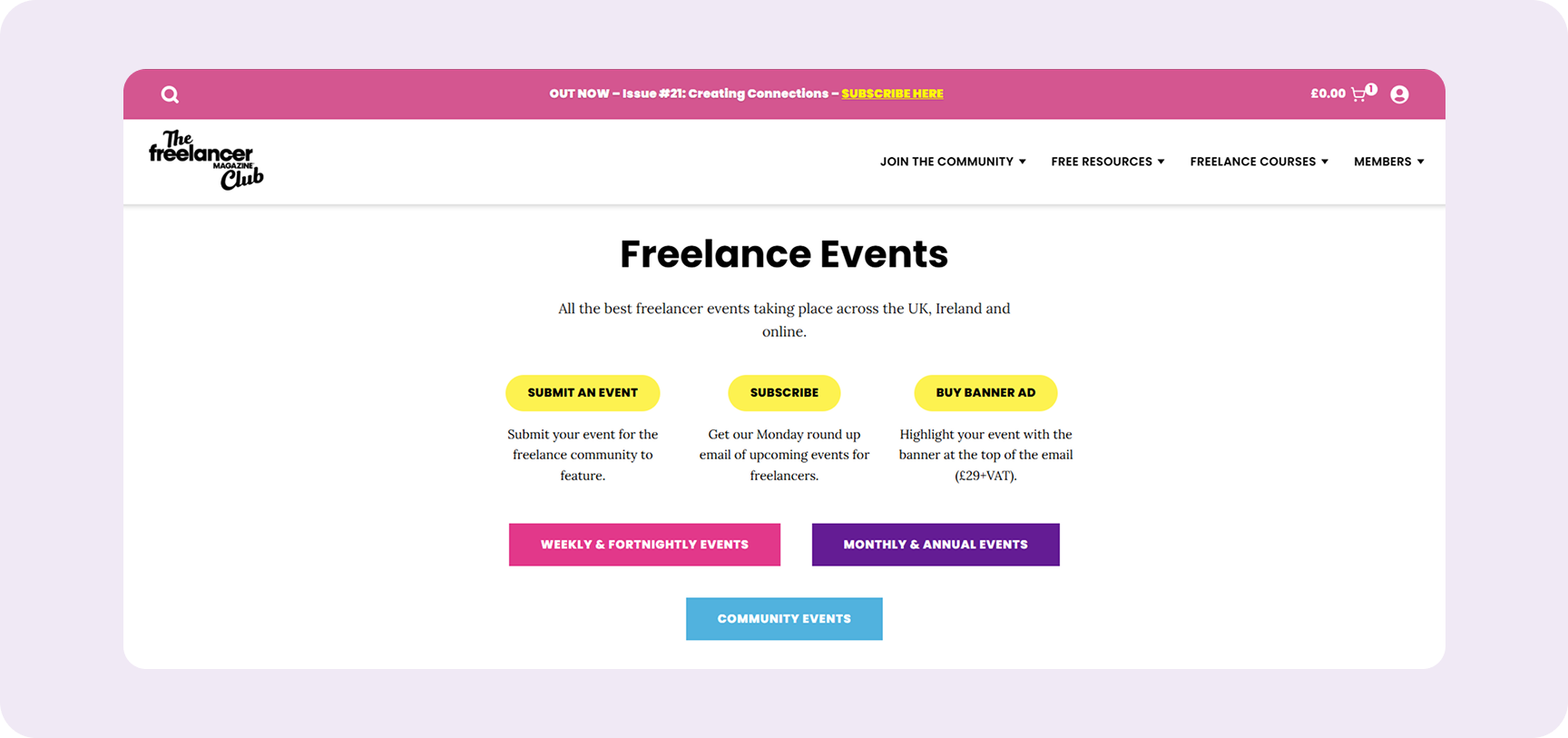
Event calendar with smart registration
Monthly, weekly, and community event listings with waitlist capture for sold-out sessions no more manual RSVP tracking.
Self-service advertising booking
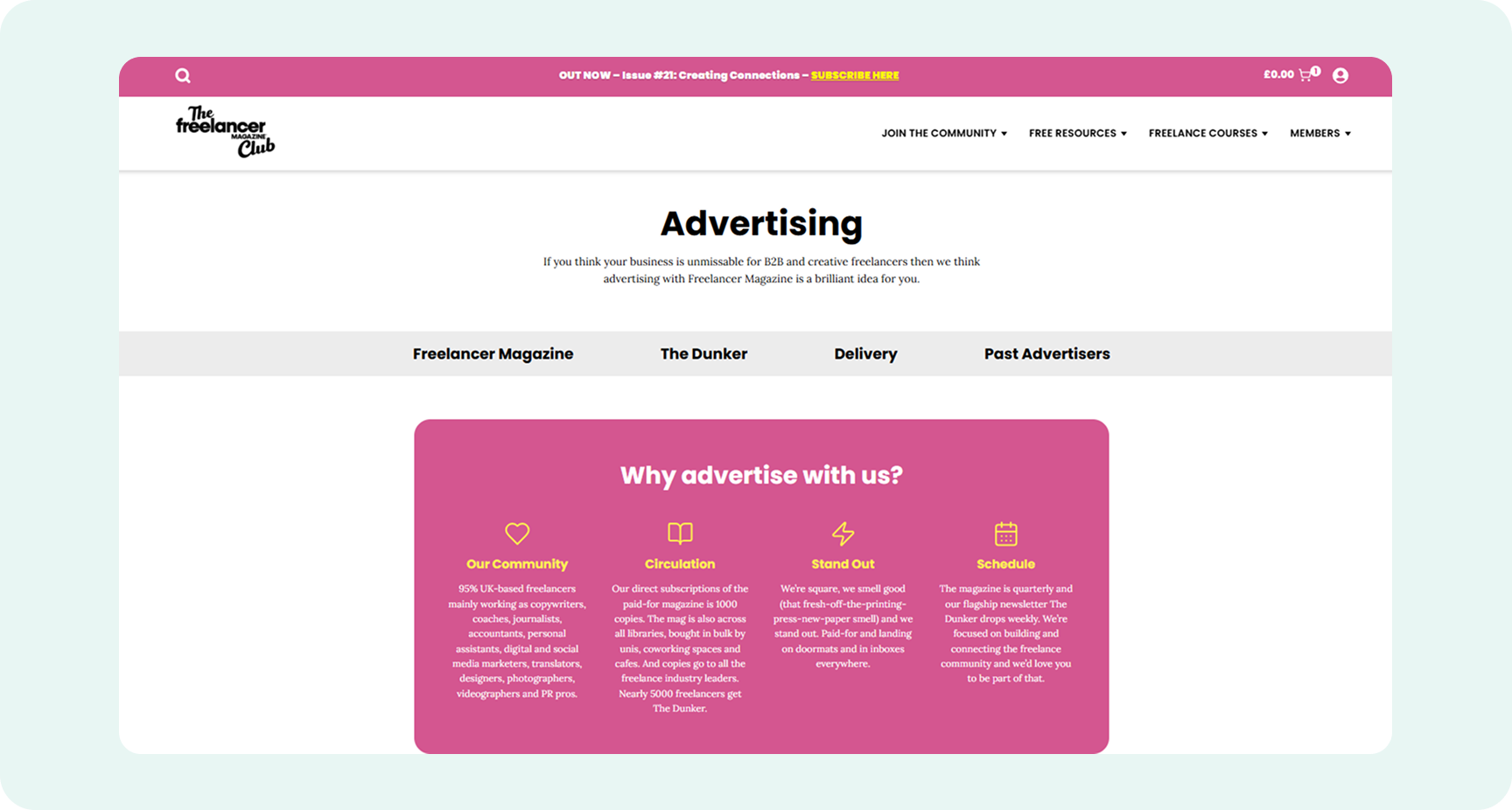
An advertising page with live availability, rate cards, and booking deadlines enabling advertisers to research and inquire without back-and-forth emails.
Launch notes
All revenue streams in one shop: Magazine subscriptions, courses, starter packs, and advertising bookings flow through a single unified storefront.
Leads captured on every page: Signup forms, waitlists, and guide downloads collect prospects throughout the site.
Automated enrollments: Course purchases and event registrations now trigger immediate access without manual intervention.
Professional brand presence: The website now reflects the editorial quality of their print publication, building trust before visitors buy.
All Deliverables
- 01.Unified storefront for every product type
- 02.Course landing pages that convert
- 03.Member directory for community discovery
- 04.Event calendar with smart registration
- 05.Self-service advertising booking
- 06.Subscription Storefront
- 07.Responsive Design
- 08.Subbly Integration
- 09.E-commerce Setup
- 10.Launch Support
Credits
- 1.Tayyab Imran
- 2.Subcrafted Team

